
DRAFT — For Dr. Rassiwala’s review; not approved for publication.
SEO metadata — CMS fields, not on-page body copy
Meta title: Teeth Grinding, Clenching & TMD \| Stockton Creative Dental
Meta description: Understand how grinding, clenching and jaw disorders differ, which symptoms deserve attention, and why care usually starts with simple, reversible steps.
Suggested URL slug: /blog/teeth-grinding-clenching-tmd
Primary search topic: teeth grinding and TMD
Estimated read time: 5–6 minutes
Suggested schema: Article; FAQPage only if appropriate for the published page, without promising search enhancements.
Maybe your jaw feels tired when you wake up. Maybe you catch yourself pressing your teeth together while driving, or someone tells you they can hear you grinding at night. Those observations can be useful, but they don’t all point to the same diagnosis. Grinding and clenching describe an activity; TMD describes a group of jaw conditions. Understanding the difference helps you talk about what you’re experiencing without assuming you already know the cause.
TMJ, TMD and Bruxism: Three Different Terms
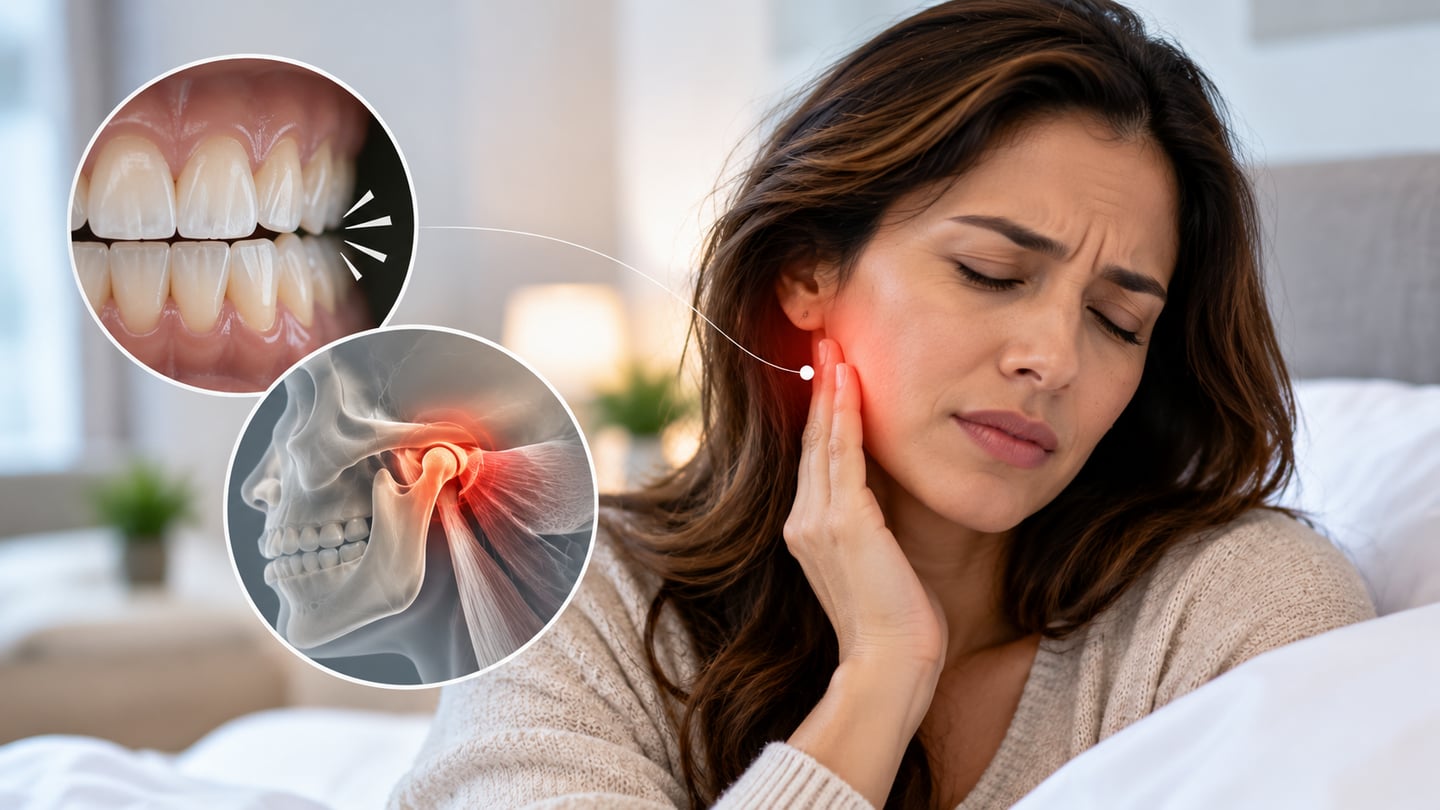
The temporomandibular joints, or TMJs, sit just in front of your ears and connect your lower jaw to your skull. Working with the surrounding muscles, they allow the jaw to open, close and move as you chew and speak. “TMJ” is the name of the joint, although people sometimes use it as shorthand for jaw pain.
TMD stands for temporomandibular disorders: conditions involving the jaw joints, chewing muscles or both. Bruxism means grinding or clenching your teeth. Grinding involves movement against the teeth; clenching can involve sustained pressure without an obvious sound. It can happen while awake or asleep. Bruxism and TMD can overlap, but having one does not automatically mean you have the other.
Why It Can Happen
There usually isn’t one explanation that fits everyone. Stress and concentration may play a role in daytime clenching. Sleep-related grinding involves activity during sleep that a person may not notice or control consciously. Certain medicines and factors such as caffeine, alcohol and tobacco can also be relevant to the history. If symptoms appeared after a medication change, bring that timing to the prescriber’s attention rather than stopping the medicine yourself.
TMD can involve several interacting factors, including injury, joint disease and how the body processes pain. Sometimes the cause remains unclear. It is too simple to assume that crooked teeth or a “bad bite” explain every painful jaw. Current NIDCR guidance does not support a strong link between misalignment and TMD, or routinely changing the bite to treat it.
What You Might Notice
Grinding and clenching can be associated with worn or chipped teeth, sensitivity, tired chewing muscles or headaches. TMD symptoms may include pain around the jaw, painful clicking, limited movement or locking. A headache by itself does not establish a dental cause, and a sensitive tooth may have a completely different explanation.
A click without pain or difficulty moving the jaw is common and often needs no treatment. What matters more is whether the symptom is changing, uncomfortable or interfering with everyday things: finishing a meal, opening comfortably or sleeping well. Old tooth wear also doesn’t tell us, by itself, whether grinding is currently active.
How an Evaluation Helps
An evaluation starts with your story: when symptoms began, whether mornings or evenings are worse, what makes them better, and whether the jaw ever gets stuck. The dentist checks the teeth, jaw movement, joints and muscles and considers other explanations for pain. Imaging is selected when it would help answer a particular clinical question; it is not an automatic requirement for every click.
A short symptom record can make that conversation more useful. Note the location of discomfort, whether chewing changes it, and any recent injury or medication change. Mention sleep concerns too. Loud snoring, witnessed breathing pauses or significant daytime sleepiness are reasons to discuss sleep evaluation with a medical professional; grinding alone does not diagnose a sleep disorder.
Why Care Usually Starts Simply
Depending on the findings, early steps may include temporarily choosing softer foods, avoiding gum chewing, using comfortable heat or cold, and noticing daytime clenching. Brief reminders during a concentrated task can help you check whether you are holding tension in your jaw. Avoid forceful stretching or trying to push a locked jaw back into place yourself.
A night guard may protect teeth from grinding damage. That is different from proving that it stops the grinding or cures TMD pain. Evidence for appliances relieving TMD pain is limited, and fit and follow-up matter. If an appliance increases pain, stop using it and speak with the clinician who recommended it. Persistent symptoms may call for other conservative care or an orofacial pain specialist.
Frequently Asked Questions
Does every person who grinds need a night guard?
No. Mild grinding may not require treatment. A recommendation depends on current damage, symptoms and the examination, rather than the label alone.
Can I clench without making a grinding sound?
Yes. Silent clenching is possible, particularly while awake. Not hearing grinding does not rule out sustained pressure on the teeth.
Will straightening my teeth cure TMD?
That should not be promised. NIDCR advises caution with treatments that permanently change the teeth or bite for TMD. Ask what supports the proposed treatment and what reversible alternatives are available.
What if my child grinds their teeth?
Children can grind too, and many outgrow it. Mention pain, tooth damage or sleep concerns to their dentist. An adult-style appliance should not be assumed appropriate for a growing child.
When should I seek care sooner?
Seek prompt evaluation if the jaw locks or eating becomes difficult, or if pain follows an injury. Severe or rapidly worsening symptoms deserve attention rather than waiting for a routine cleaning.
A Useful Starting Point
You don’t need to arrive with a diagnosis. A clear description of what you notice and how it affects your day is enough to begin. At Stockton Creative Dental, the conversation can start with understanding the symptoms and deciding whether monitoring, simple changes or further evaluation makes sense.
Clinical Sources — Review Notes, Not On-Page Copy
Definitions, contributing factors and diagnosis: NIDCR, Bruxism — https\://www.nidcr.nih.gov/health-info/bruxism
Bruxism context: NIDCR, Ask the Expert — https\://www.nidcr.nih.gov/health-info/bruxism/ask-expert-bruxism-tooth-grinding
TMD uncertainty, painless clicks, conservative care and appliance limits: NIDCR, TMD — https\://www.nidcr.nih.gov/health-info/tmd
Tooth protection, children and alternative sources of jaw pain: ADA MouthHealthy, Teeth Grinding — https\://www.mouthhealthy.org/all-topics-a-z/teeth-grinding
Jaw anatomy and examination: ADA MouthHealthy, TMJ — https\://www.mouthhealthy.org/all-topics-a-z/tmj
Practice context checked: https\://www.stocktoncreativedental.com/about/
Editorial note: Current NIDCR guidance takes priority over older statements suggesting routine bite correction for TMD. No specialist service or guaranteed treatment result is attributed to the practice.